Sunday Resources 2023

A new life in Christ...
Aboriginal and Torres Strait Islander Sunday Resources
2 July 2023
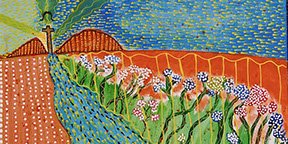
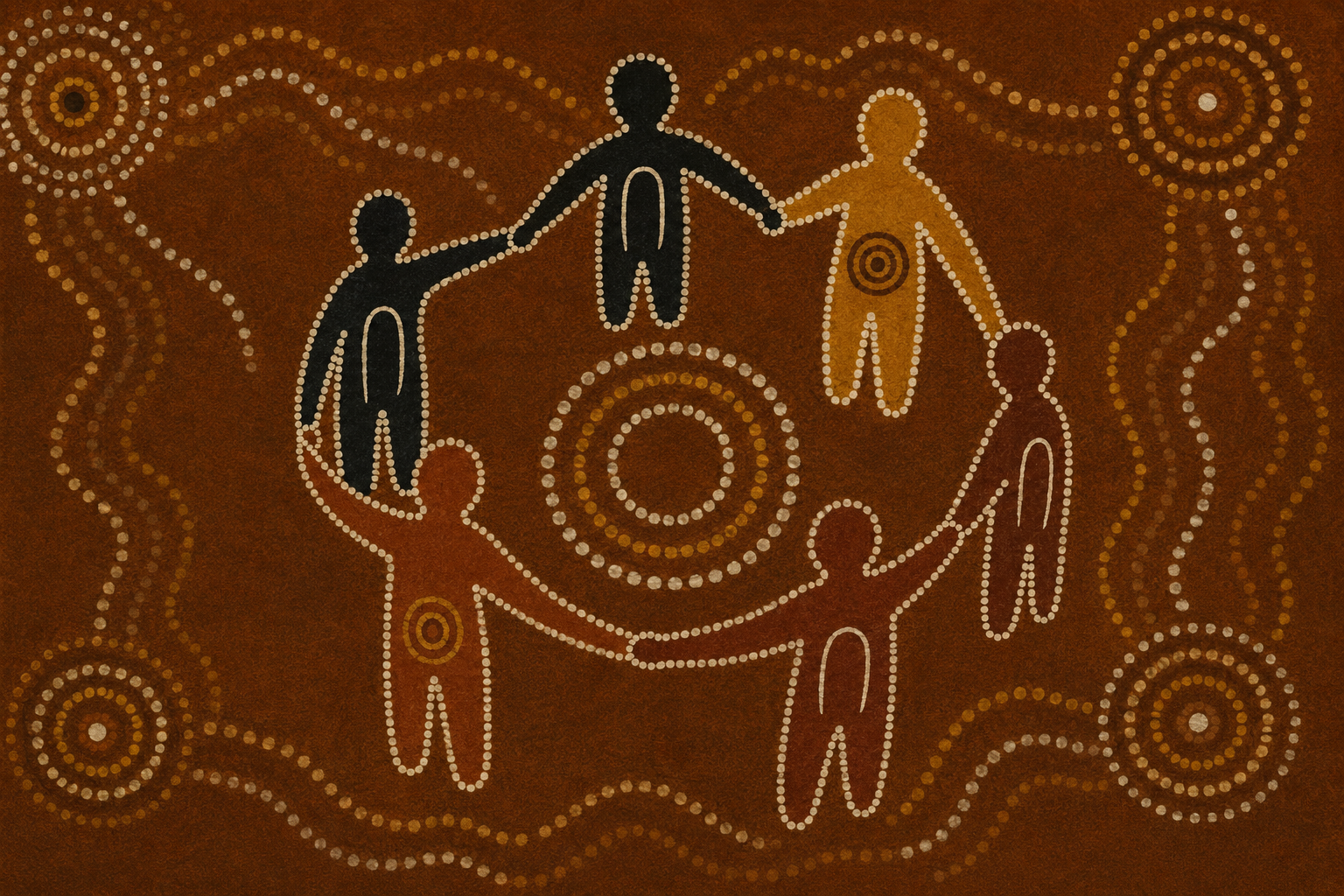
Jesus the Living Water by Troy Mardigan (Daly River)
Every year, on the first Sunday in July, Catholics come together across Australia to acknowledge and celebrate the gifts of Australia’s First Peoples in the Catholic Church. As we approach the Indigenous Voice to Parliament , it has never been more important for Catholics to come together and listen to Australia;s First Peoples.
In Australia we are blessed to be home to the world's oldest continuing Culture and the resources that we have created and collated will assist you to celebrate this very important day on our Liturgical Calendar.
Resource Booklet
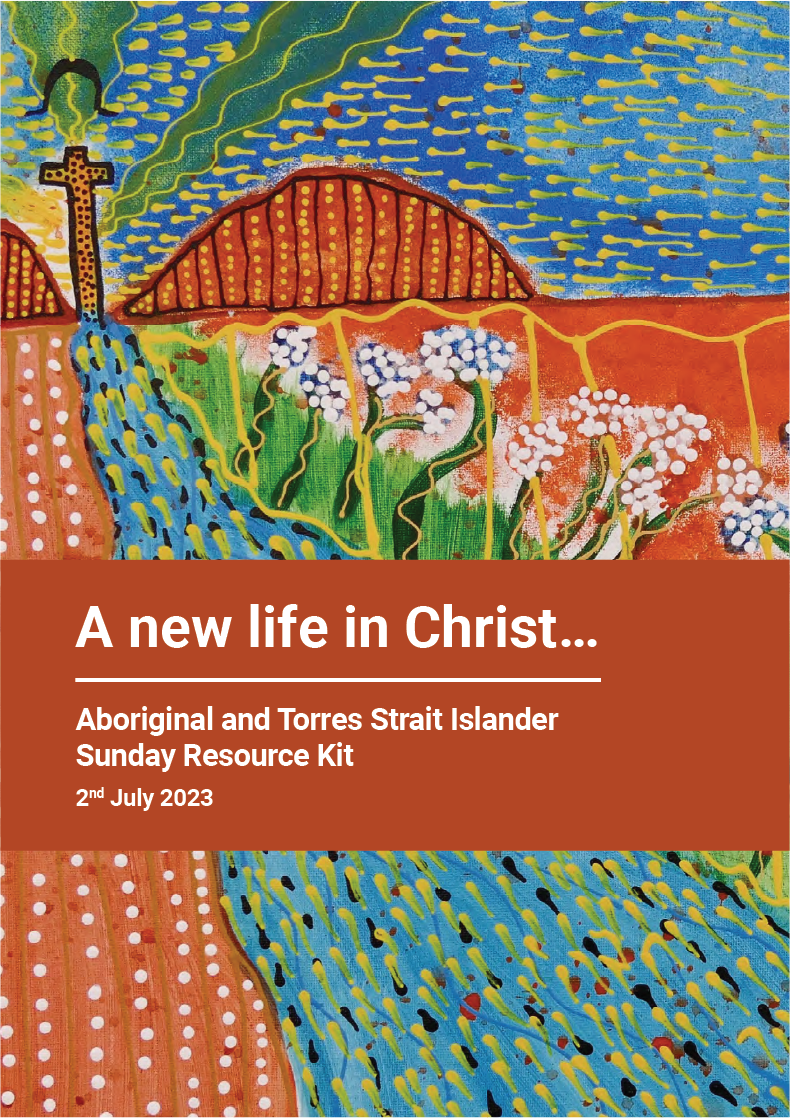
The 24 page, full colour booklet for 2023 has been designed to help Schools, Parishes and organisations celebrate the gifts of First Australian Catholics.
The NATSICC Liturgy team has compiled prayers, Liturgy suggestions, homily notes and statistics that will enhance and enrich your celebration.
Additionally, there is a practical activity that calls for Catholics around Australia to knit / crochet blankets for the NATSICC Palliative Care package program.
Booklet download - Web Version | Print Ready
Poster
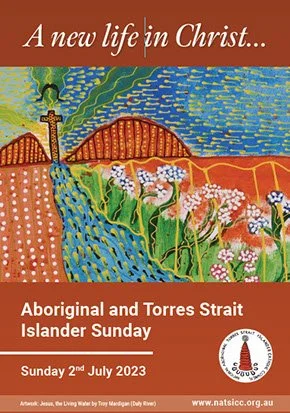
Click on the image to download a high resolution version of the 2023 Aboriginal and Torres Strait Islander Sunday Poster featuring artwork by Troy Mardigan (Daly River)
Youth Activities
The Voice to Parliament Referendum and other steps on the Reconciliation journey
The 2023 theme for Aboriginal and Torres Strait Islander Sunday is ‘A New Life in Christ’. It relates to the transformative possibilities that come when we walk God’s Way of love. At this time in Australia’s Reconciliation journey, we see signs of new life – the Uluru Statement’s invitation to walk together “for a better future” is being taken up and its call to join in listening, truth-telling and agreement making is growing louder.
When we encourage young people to join us on the journey, we do so knowing that they bring unique perspectives, ideas and energy that will benefit us all, now and for future generations. The activities that follow aim to celebrate and make space for their insights as they learn about the Voice to Parliament Referendum and other steps on Australia’s Reconciliation journey.
Learning to listen to First Nations people tell their stories is important to understanding the truth about their lives, histories and hopes for the future. While there are common themes, particularly concerning the injustices First Nations Peoples have faced and continue to face, their stories are as unique as their Language and Cultures. So, as you lead these youth activities, be encouraged to draw in First Nations stories shared by local Traditional Custodian groups or other accounts from reliable sources.
Learning Objectives
The specific objective is to help youth learn about the Voice to Parliament Referendum and its potential impact, as well as other steps that promote and enable Reconciliation.
The activities described below are designed for use with young people in school, parish and other group settings. They link to the Australian Curriculum, particularly the cross-curriculum priority of Aboriginal and Torres Strait Islander Histories and Cultures and the general capabilities of Critical and Creative Thinking, Ethical Understanding, Intercultural Understanding and Personal and Social Capability (available at https://v9.australiancurriculum.edu.au/teacher-resources). They also incorporate Catholic Social Teachings (CSTs) on justice and political participation, particularly the principle of Subsidiarity.
For more activities, including a listening meditation based on Dr Miriam Rose Ungunmerr Baumann’s words about Dadirri (deep listening), visit www.indigenousvoice.church.
Setting the Space
Create a sacred space that provides a focus for learning and contemplation. Incorporate visual and liturgical elements that will help young people make connections with ideas like Spirituality, Faith, Culture, Community and Ecology. Taking inspiration from the theme, ‘A New Life in Christ’, include candles, water, gum leaves, rocks, seeds, branches or bark as well as First Nations artwork and music.
Activity Materials
Resources on the Voice to Parliament Referendum, such as news articles, official Government documents and opinion pieces
Papal Encyclicals that address the importance of political engagement and the CST principle of Subsidiarity, such as Pope Francis’ Laudato Si’ and Pope Benedict XVI’s Caritas in Veritate
Writing materials
Written by Craig Arthur (National Aboriginal and Torres Strait Islander Catholic Council) and Dr Rebekah Pryor (Caritas Australia)
Multimedia
Virtual Acknowledgment
This Acknowledgment of Country and presentation for use in Parishes and Schools will set the scene for your Aboriginal and Torres Strait Islander Sunday Celebrations. It is suited for Parishes, Schools and Organisations who have been unable to invite a Traditional Custodian to provide a Welcome to Country.
Music
Homily Notes
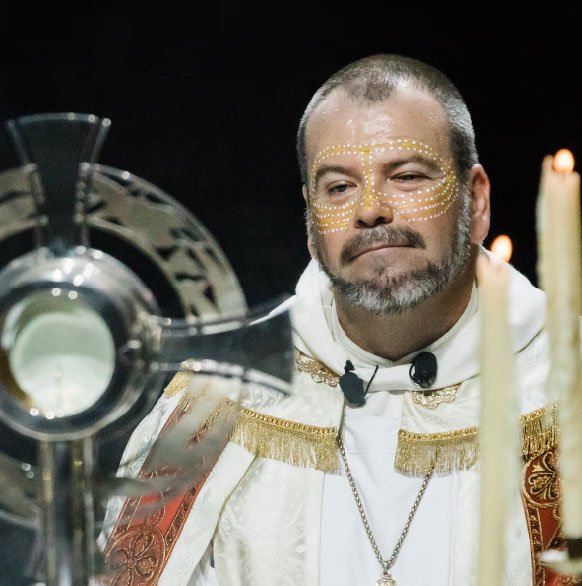
Bishop Columba Macbeth Green has provided the Homily Notes for this year's celebration:
The Second Reading from Paul to the Romans reminds us of the great gift of Baptism. When we rise out of the waters of Baptism, we rise to a new life in Christ and Death and Sin no longer has power over us. This is part of the Good News and is a great gift of God to us. To receive this gift of new life in Baptism, we need to have an encounter with God somehow. One of the best ways to encounter God is through hospitality.
Hospitality can be defined as the friendly and generous reception and entertainment of guests, visitors, or strangers.
In the readings for Mass today, we hear about the special blessings that people will get if they show hospitality to someone sent by the Lord.
In the First Reading from 2nd Kings, we hear about the extraordinary hospitality shown to the Prophet Elisha by the woman at Shunem and her husband. Elisha was travelling on Mission for the Lord and was given hospitality by this kind woman. The woman (we do not know her name - but I like to think of her as Beryl) judged Elisha to be a holy man and, after giving him food and rest on his journeys, even convinced her husband to build a small room in the roof that Elisha could stay in when he came past that way. Because of her hospitality, she encountered God through Elisha. The woman was rewarded for her kindness towards the Prophet with what she wanted most but didn’t have - a child. Her life was changed.
In the Gospel of Matthew, Jesus tells his Apostles that he wants 100% commitment from them. Jesus wants people to encounter Him in His followers so their lives may be changed. He tells the Apostles that anyone who is hospitable to them is hospitable to Him. Jesus goes on to say that anyone who is hospitable to a Prophet, Holy Man, or the least of His Disciples because he is one of His followers will be rewarded. We know that being rewarded by Jesus would be life-changing.
Culture is very important when it comes to hospitality. In the cultures of the Middle East it was considered a duty to be hospitable to the traveller that comes by. This was (and is) especially true of the nomadic peoples who lived in arid and inhospitable areas. It was expected that, if a stranger was judged to come in peace, they would be welcomed into the tent and be provided sustenance and protection by the tribe or family.
With these Cultural practices, it was easy for God to teach people the importance of encountering God by being especially hospitable to those sent by God as His messengers. Special rewards, physical and spiritual, and no doubt, life-changing will be bestowed on them for their kindness.
In the Culture of most First Nations Peoples in Australia, hospitality is also very important. When someone is “Welcomed to Country,” the Elder or Elders judge that the stranger comes in peace and is given permission to walk on the land of which they are the Traditional Custodians. The “Welcome to Country” also means that while the stranger is on the Traditional Land, the Custodians will give sustenance and protection if needed.
Nearly all of my ministry to the Aboriginal people of my Diocese of Wilcannia-Forbes starts with hospitality. I get ‘Welcomed to Country’. If I am assessed as a friend and not a foe, I get into conversations in the street, then I can get invited into a person’s front yard for a yarn, and then later on, I might be invited to talk on the verandah, and if I am privileged, I get invited into the home. The receiver of the hospitality must respect and acknowledge the hospitality that is given. Then trust is established, and with trust comes encounter, and in some cases, the Holy Spirit works through me, the gift of new life in Baptism is asked and received, and a life is changed.
I think all of us in the Church could learn a lot from the culture of hospitality of our First Nations Peoples in helping bring people closer to God. Respect, patience, building trust, protecting those in our care, invitation and welcome are all facets of hospitality and, as such, are very important in bringing about an encounter with God.
NATSICC Retreat Videos
One of the ways that you can enhance and enrich your celebration and understanding of Aboriginal and Torres Strait Islander Sunday is to watch the presentations from the recent NATSICC Virtual Retreat. You can view them prior to the celebration as a way to prepare either individually, or ideally as a group to facilitate discussion and sharing around the topic covered.
Our voices on...
A page that shares NATSICC's points of view on various important topics, including the Environment, the Indigenous Voice to Parliament and more here